
Recording — 18 meters
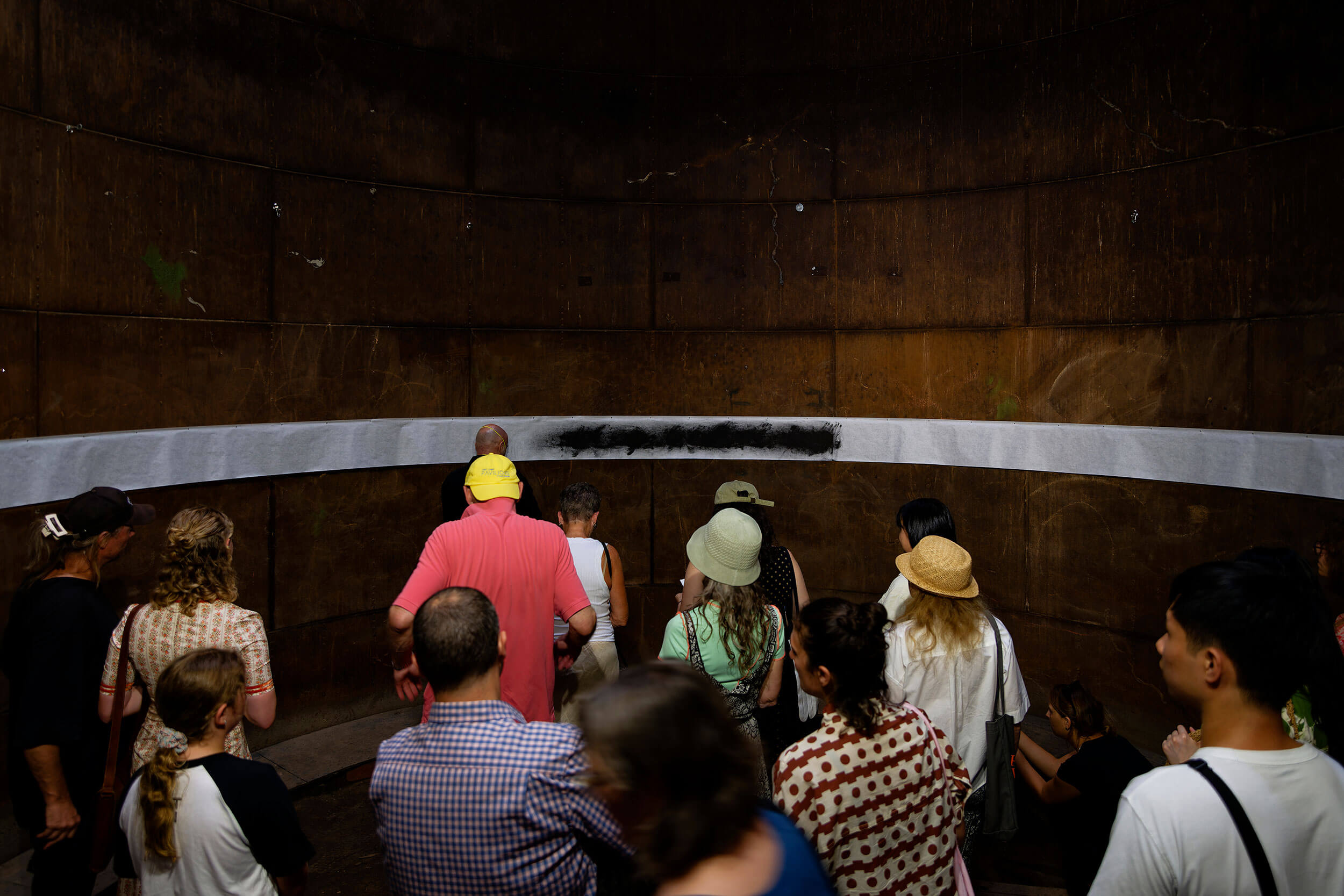
Recording — 18 meters was created during a performance inside an old silo at the Art Omi complex. The walls of the silo are made of iron that has rusted over time through exposure to weather conditions. A continuous sheet of paper, A4 in height and 18 meters long, was placed along the inner circumference of the space.
Over the course of approximately fifteen minutes, in front of an audience, the artist moved along the inner circumference of the silo, pressing and rubbing iron oxide pigment — a form of black rust — into the surface of the paper with the palm of his hand. Through the repetition of this simple gesture, traces of the moment, pressure, movement, and the texture of the space were inscribed onto the paper.
Over the course of approximately fifteen minutes, in front of an audience, the artist moved along the inner circumference of the silo, pressing and rubbing iron oxide pigment — a form of black rust — into the surface of the paper with the palm of his hand. Through the repetition of this simple gesture, traces of the moment, pressure, movement, and the texture of the space were inscribed onto the paper.

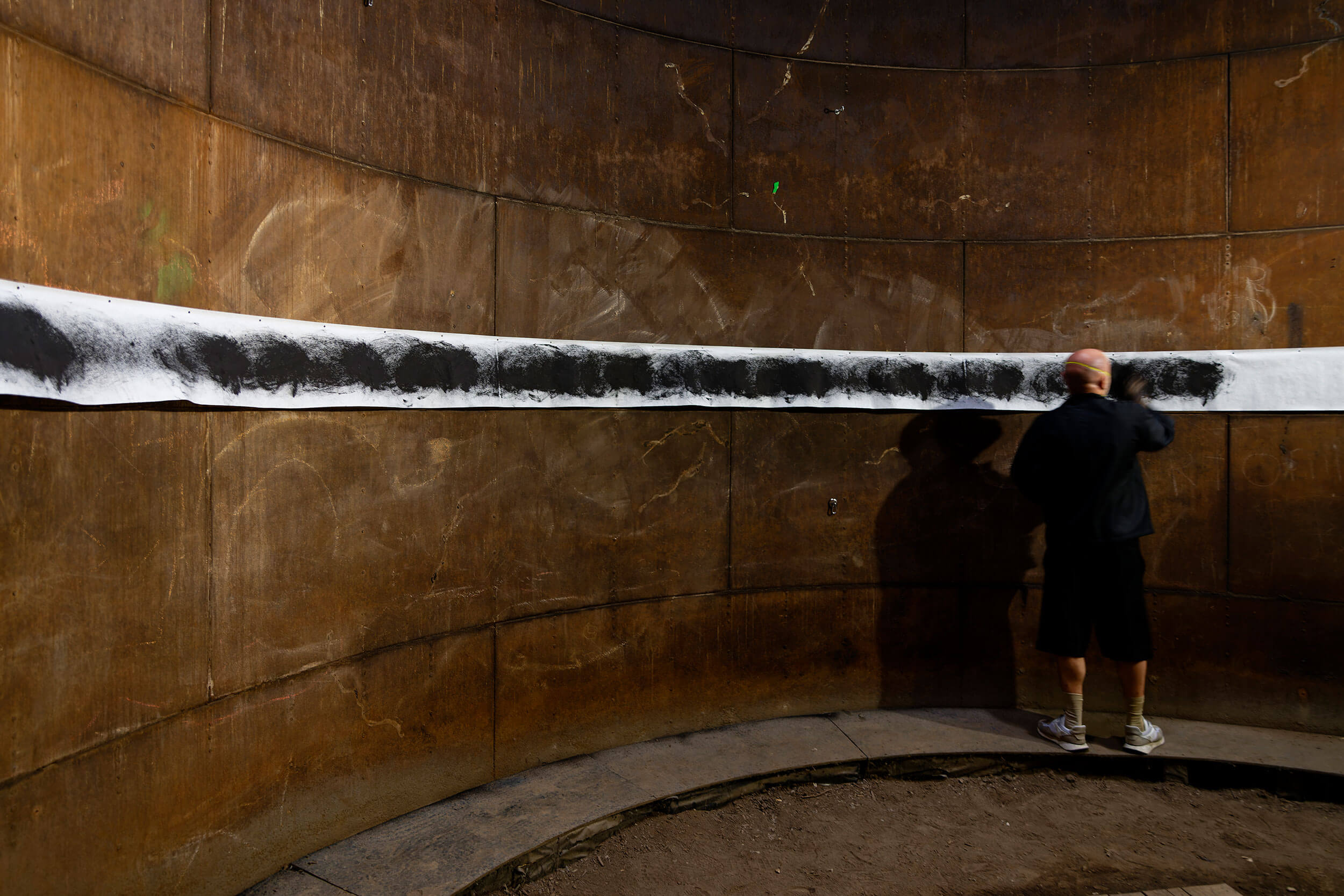
The length of the work emerged from the dimensions of the space in which it was created. The space determined its measure and trajectory, while the movement of the body through it determined its duration. The performance ends when the trajectory is completed, when the full circumference of the silo has been traversed. The drawing therefore does not emerge through the composition of an image, but through the process of applying pigment, becoming a material record of a spatially and temporally determined event.
The movement is repetitive, yet always different. Despite their similarities, the traces cannot be replicated. At certain points, distinct imprints of the palm appear, only to be smudged, dispersed, and eventually disappear, spreading across the surface of the paper like the passage of time — imprints of movement itself.
Recording here denotes a process of inscription and preservation: body, pigment, paper, space, and duration together produce the record. The paper registers the changes that occur through movement — differences in pressure, rhythm, contact, and the distribution of pigment. The recording is not an image of the event, but what remains of it in matter.
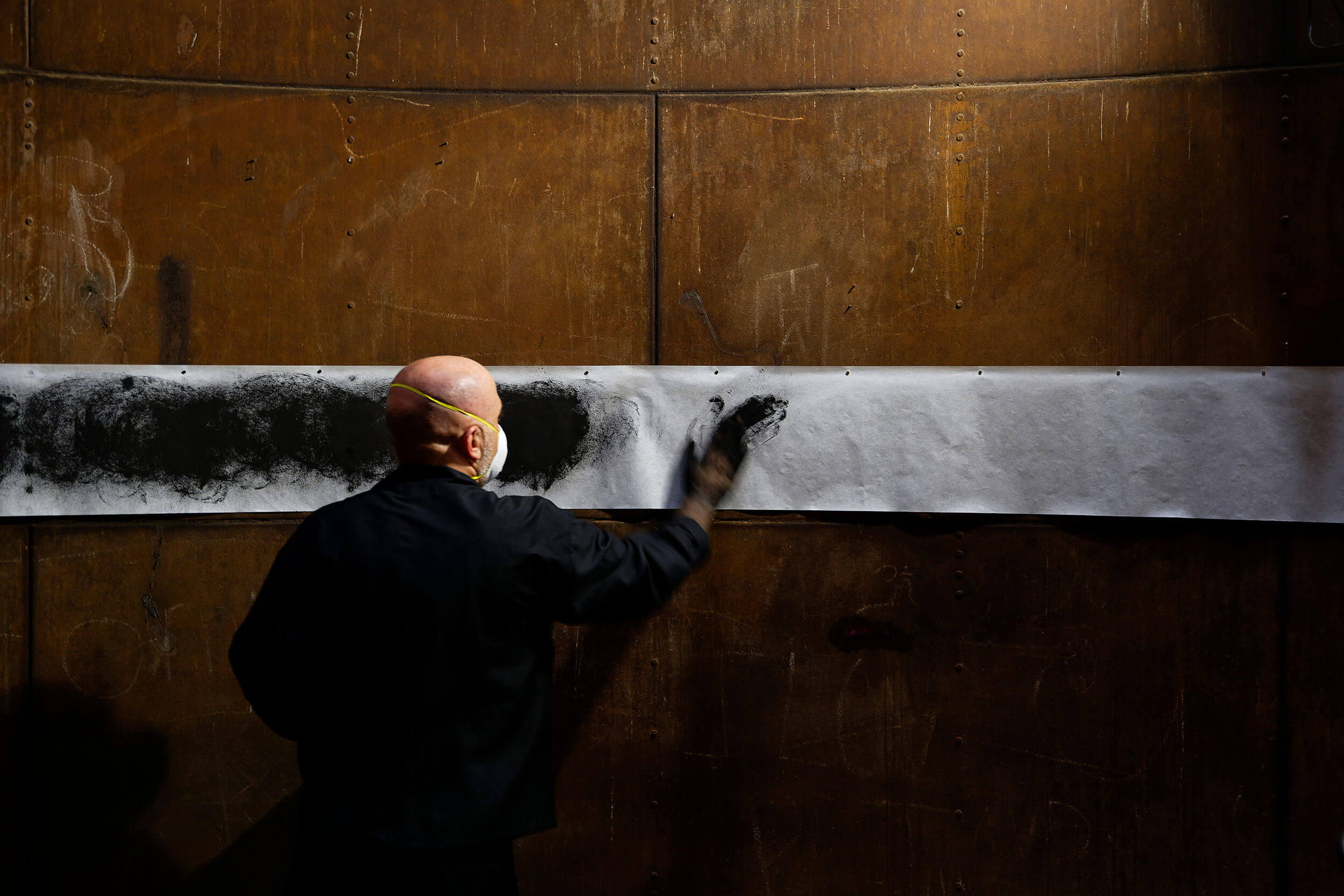
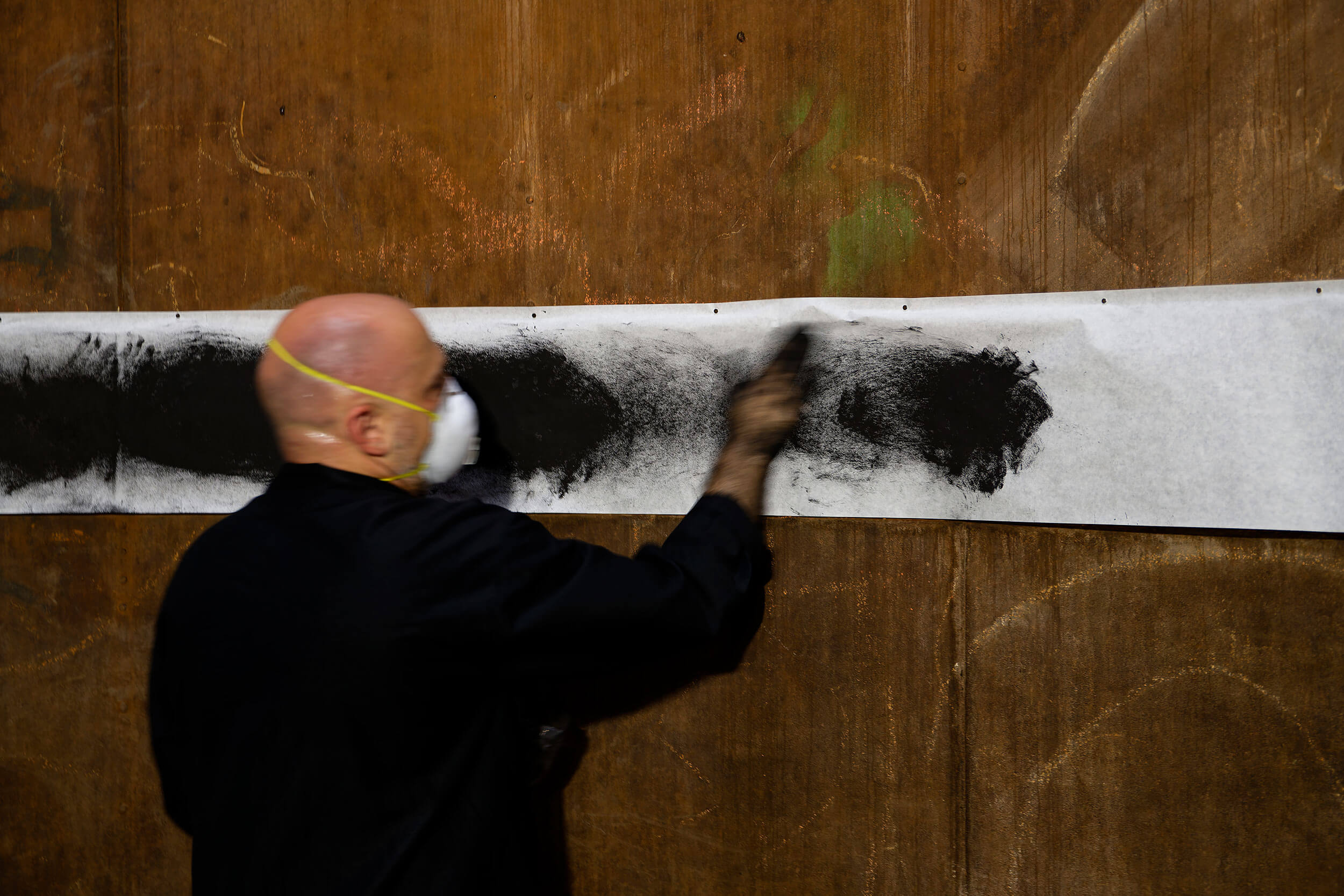
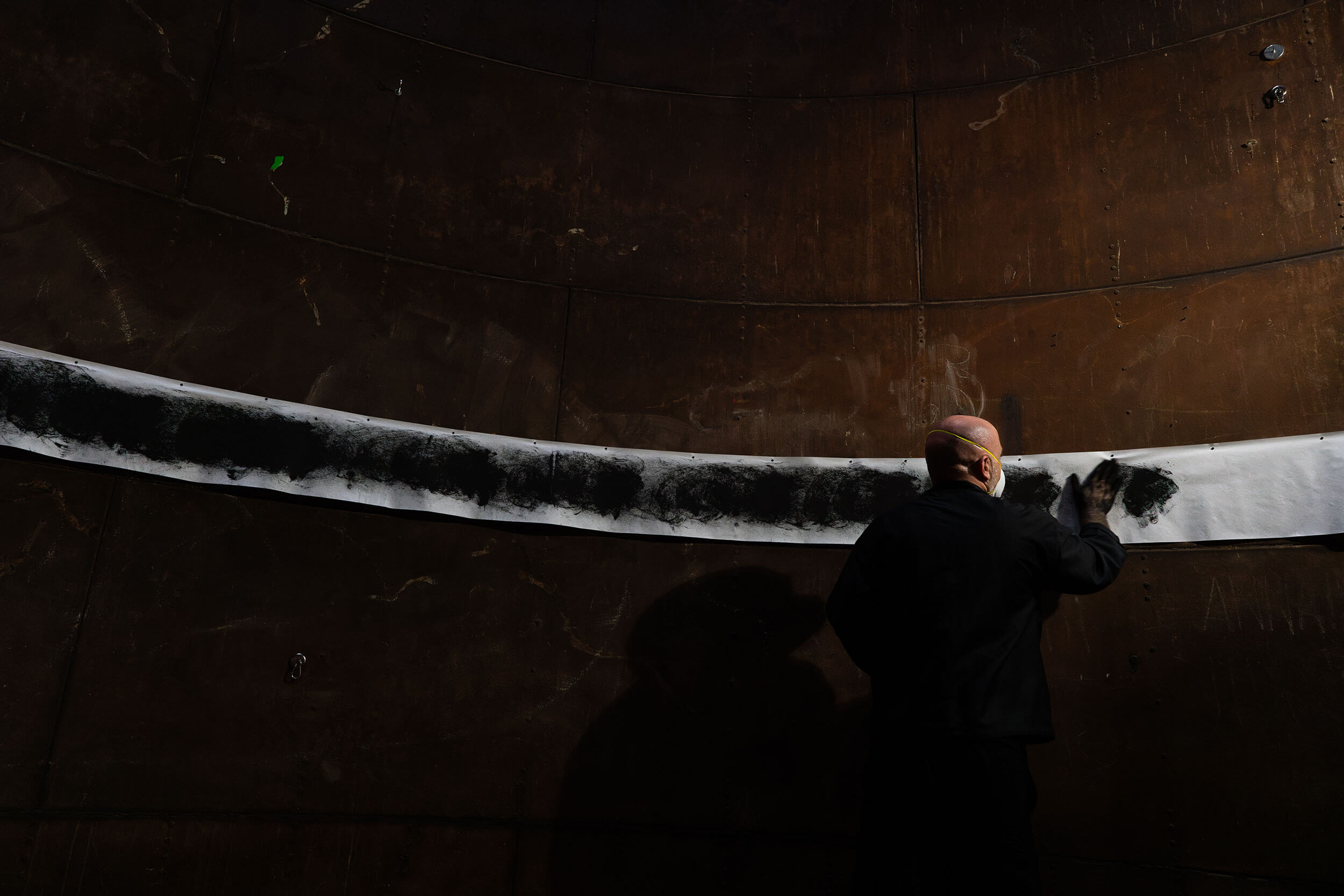
The entire action grows out of what I normally do when I draw: leaving a trace through gesture, through the act of applying matter to a surface. I chose to present the work as a performance in order to make the process itself visible and to emphasize the act of recording — to open it up and share it with an audience, inviting others into what is otherwise a solitary act of drawing.
Recording — 18 meters continues an investigation into recording and inscription present in my earlier works. In Sound Imprints, sound waves and their interaction with space leave a material trace; in Magnetic Records, information is inscribed into matter while remaining hidden beneath its visible surface; in The Limit of Representation, a repeatable operation produces unrepeatable results within predetermined material constraints. In A4, the specific characteristics of the reproduction device leave unrepeatable traces of technological execution. Recording approaches the same question from another position: what remains when space, body, and moment are inscribed directly into matter — without tools?
Recording — 18 meters continues an investigation into recording and inscription present in my earlier works. In Sound Imprints, sound waves and their interaction with space leave a material trace; in Magnetic Records, information is inscribed into matter while remaining hidden beneath its visible surface; in The Limit of Representation, a repeatable operation produces unrepeatable results within predetermined material constraints. In A4, the specific characteristics of the reproduction device leave unrepeatable traces of technological execution. Recording approaches the same question from another position: what remains when space, body, and moment are inscribed directly into matter — without tools?
Iron oxide in the work is more than a pigment. It connects the material of the space with the history of recording. The silo is an iron structure exposed to oxidation, while black iron oxide — the pigment used to make the drawing — is one form of oxidized iron. At the same time, iron oxides have historically been key materials in magnetic media for recording and storing information. The same element therefore appears as architecture, as the result of its material transformation, and as a recording medium. In a work titled Recording, this connection is not merely symbolic: the material itself carries a history of recording.
Video documentation of the performance also exists, assembled from spontaneous footage recorded by three people who were present. The video is not conceived as a separate work or as an equal component of the exhibition, but may be presented alongside the drawing as contextual material connecting its physical form to the space and event from which it emerged.
Video documentation of the performance also exists, assembled from spontaneous footage recorded by three people who were present. The video is not conceived as a separate work or as an equal component of the exhibition, but may be presented alongside the drawing as contextual material connecting its physical form to the space and event from which it emerged.

Photo by Viktor Popović
& Karen Pearson
Realised with the support of the
Ministry of Culture and Media of the Republic of Croatia
& Gallery of Fine Arts in Split